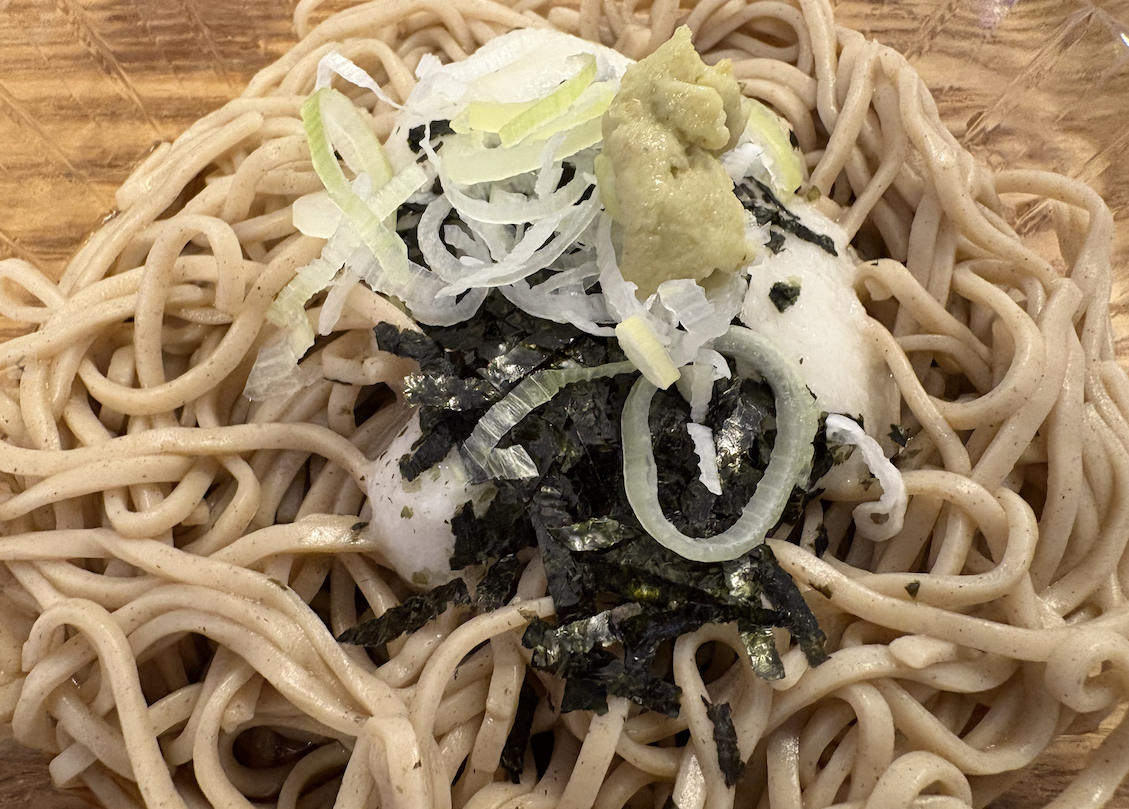
とろろそばは、そばの上にすりおろした山芋(とろろ)をかけた日本の麺料理だ。山芋特有のねばりけと、そばの風味が組み合わさり、するすると食べられるのが特徴である。冷たいそばにかけられることが多いが、温かいかけそばの上にのせる場合もある。薬味として、刻んだネギや海苔が添えられるのが一般的で、出汁の効いたつゆをかけて食べる。消化に良いとされ、夏の暑い時期や食欲のない時にも好んで選ばれる一品だ。
Tororo soba is a Japanese noodle dish consisting of soba noodles topped with grated yam (tororo). Its characteristic smooth texture, combined with the flavor of soba, makes it easy to slurp down. While often served with cold soba, it can also be placed on top of hot soba in broth. It’s commonly garnished with chopped green onions and nori (seaweed), and eaten with a dashi-based dipping sauce. Considered easily digestible, it’s a popular choice during hot summer days or when one has a poor appetite.
とろろそばの正確な発祥時期は定かではないが、そばととろろ(山芋)の歴史を紐解くと、その由来が見えてくる。日本でそばが麺として食べられるようになったのは室町時代以降、本格的に広まったのは江戸時代からだ。一方、山芋は縄文時代から食用とされており、古くから滋養強壮に良いとされてきた。特に江戸時代には、東海道の宿場町、現在の静岡市丸子宿などで「とろろ汁」が旅人の間で人気を集め、松尾芭蕉の句や十返舎一九の『東海道中膝栗毛』にも登場するなど、その存在が広く知られていた。
このような背景から、栄養価の高いとろろと、手軽に食べられるようになったそばを組み合わせるという発想が生まれ、とろろそばが誕生したと考えられている。具体的な発祥地としては、高尾山の薬王院を訪れる参拝者のために、滋養強壮効果のあるとろろをそばに乗せて提供したのが始まりとする説や、箱根湯本の「はつ花そば」が元祖とする説など、いくつかある。いずれにしても、疲労回復や消化促進の効果が期待されるとろろと、人々に愛されたそばが結びつき、各地で独自の進化を遂げながら定着していったのだ。
The exact origin of tororo soba is uncertain, but tracing the history of soba noodles and tororo (yam) reveals its likely derivation. Soba noodles began to be eaten as noodles in Japan after the Muromachi period, and their popularity truly took off during the Edo period. Meanwhile, yams have been consumed since the Jomon period and have long been regarded as beneficial for health and stamina. Especially during the Edo period, “tororo jiru” (yam soup) became popular among travelers in post towns along the Tokaido road, such as the current Mariko-juku in Shizuoka City, and its existence was widely known through poems by Matsuo Basho and Jippensha Ikku’s “Tokaidochu Hizakurige.”
Given this background, the idea of combining nutrient-rich tororo with easily consumable soba is believed to have led to the birth of tororo soba. There are several theories regarding its specific origin, including one that suggests it began when tororo, known for its health benefits, was served on soba to pilgrims visiting Yakou-in Temple on Mt. Takao, and another that credits “Hatsuhana Soba” in Hakone Yumoto as its originator. In any case, the combination of tororo, which is expected to aid in fatigue recovery and digestion, and beloved soba, took root and evolved uniquely in various regions.
コメント