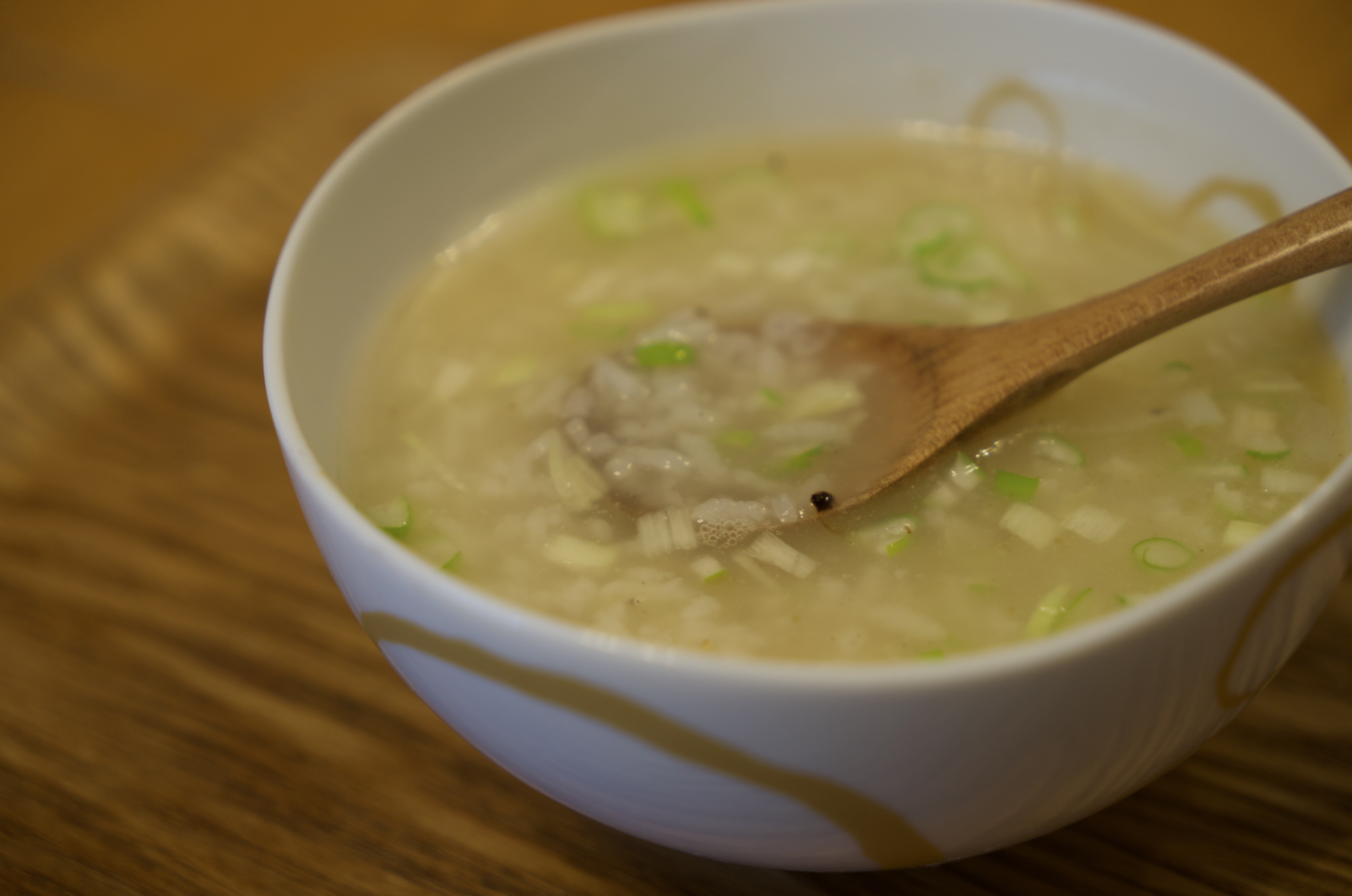
おかゆは、米を多めの水で炊き、米が水分をたっぷり吸ってやわらかくなった粥状の食べ物である。消化しやすく、病人食や離乳食としてよく用いられる。塩や醤油で味付けしたり、梅干し、卵、ネギなどを加えて風味を増すことも多い。
Okayu is a porridge-like food made by cooking rice with a generous amount of water until the rice absorbs plenty of moisture and becomes soft. It is easily digestible and commonly used as food for the sick or as baby food. It is often seasoned with salt or soy sauce, and ingredients like pickled plums, eggs, or green onions are often added to enhance its flavor.
おかゆを作るには、まず米を洗い、鍋に入れる。米の量の5倍から10倍の水を加え、強火にかける。沸騰したら弱火にし、蓋を少しずらして吹きこぼれないようにする。米が鍋の底にくっつかないよう、時々かき混ぜながら、米が十分にやわらかくなり、水分を吸ってとろみがつくまで30分から1時間ほど煮込む。これで基本的なおかゆの完成だ。
To make okayu, first wash the rice and place it in a pot. Add 5 to 10 times the amount of water to the rice and bring it to a boil over high heat. Once boiling, reduce the heat to low and slightly offset the lid to prevent it from boiling over. Simmer for about 30 minutes to an hour, stirring occasionally to prevent the rice from sticking to the bottom of the pot, until the rice is sufficiently soft and has absorbed the water, becoming thick. This completes the basic okayu.
おかゆの歴史は非常に古く、米を主食とする地域では古くから食べられてきた。日本には紀元前1世紀頃に米が伝わり、その頃から蒸すか煮るかの方法で食べられていたと考えられている。煮ることで作られるのが、今のおかゆの原型だ。奈良時代には、ほうじ茶や番茶で米を炊いた「茶粥」が登場し、西日本を中心に広まっていった。江戸時代に入ると、関東では病人食としてのイメージが定着した一方で、関西では日常的な朝食として食べられるなど、地域によって位置づけが異なった。また、七草粥のように年中行事の一環としても重要視されてきた。
The history of okayu is very old, and it has been eaten in regions where rice is a staple food since ancient times. Rice is believed to have been introduced to Japan around the 1st century BCE, and it was eaten either by steaming or boiling. The boiled version is considered the prototype of today’s okayu. In the Nara period, “chagayu” (tea porridge), made by cooking rice with roasted or coarse tea, emerged and spread mainly in Western Japan. In the Edo period, while it became associated with food for the sick in the Kanto region, it was consumed as a daily breakfast in the Kansai region, among other regional differences in its status. Furthermore, okayu has also been regarded as important in annual events, such as Nanakusa-gayu (seven-herb porridge).
おかゆはシンプルな料理だが、様々なアレンジで飽きずに楽しむことができる。例えば、鶏肉やきのこ、野菜などを加えて中華粥にするのは定番のアレンジだ。ごま油や生姜を効かせると、さらに風味が増す。また、卵を溶き入れたり、チーズを加えて洋風のリゾット風に仕上げるのもいい。梅干しや鮭フレーク、佃煮などをトッピングすれば、手軽に味のバリエーションを増やせる。さらに、出汁を昆布や鰹節でとる代わりに、鶏ガラや豚骨でとれば、より濃厚な味わいのおかゆが楽しめるだろう。
Okayu is a simple dish, but you can enjoy it without getting bored by arranging it in various ways. For example, a classic arrangement is to add chicken, mushrooms, or vegetables to make Chinese-style congee. Adding sesame oil and ginger further enhances the flavor. It’s also good to beat in an egg or add cheese to create a Western-style risotto. Topping it with pickled plums, flaked salmon, or tsukudani (simmered foods) easily expands the variety of flavors. Furthermore, if you use chicken bones or pork bones to make the broth instead of kelp or bonito flakes, you can enjoy a richer tasting okayu.
おかゆに似た料理は世界中に存在する。例えば、イタリアのリゾットは、米をブイヨンで煮込む点で共通しているが、おかゆよりも水分が少なく、米の中心に少し芯が残る「アルデンテ」の状態に仕上げるのが特徴だ。また、タイにはさらっとした口当たりのカオトムというおかゆがあり、具材や香辛料で様々なバリエーションが楽しまれている。韓国のチュッ(粥)はアワビ粥や鶏粥など種類が豊富で、日本のものと見た目も似ている。イギリスのポリッジは、オートミールを牛乳や水で煮たもので、甘くして朝食として食べられることが多い。これらの料理は、それぞれの地域の食材や食文化が反映されており、米を煮て作るという共通点がありながらも、多様な進化を遂げている。
Dishes similar to okayu exist all over the world. For example, Italy’s risotto shares the commonality of cooking rice in broth, but it’s characterized by having less liquid than okayu and being cooked to an “al dente” state where the rice remains slightly firm in the center. In Thailand, there’s khao tom, a lighter-textured porridge, enjoyed with various ingredients and spices. Korea’s juk (porridge) comes in many varieties, such as abalone porridge and chicken porridge, and visually resembles Japanese okayu. England’s porridge is made by cooking oatmeal with milk or water, often eaten sweet for breakfast. These dishes reflect the ingredients and food culture of their respective regions, showing diverse evolutions despite sharing the common method of cooking rice by boiling.
おかゆに似た料理は、それぞれの国の食文化や歴史の中で独自の進化を遂げ、多種多様な姿で親しまれている。
アジアでは、中国のコンジー(Congee)が代表的で、日本のそれよりもさらにとろみが強く、鶏肉や豚肉、魚介類、ピータンなど様々な具材を加えて、食事としてしっかりと食べるのが一般的だ。タイには、さらっとしたカオトムと、米の粒がなくなるまで煮込んだ濃厚なジョークの二種類がある。フィリピンのルーガウ(Lugaw)やアロス・カルド(Arroz Caldo)は、鶏肉や生姜、ニンニクなどを入れた風味豊かなおかゆで、中国とスペインの文化が融合した特徴を持つ。ベトナムのチャオ(Cháo)もまた、鶏肉や魚介類、野菜などを加えて作られる。インドやパキスタンでは、米と豆を煮込んだキチュリ(Khichdi)がよく食べられ、バターや練乳を加えることもある。
西洋に目を向けると、先述したイタリアのリゾットの他に、ヨーロッパ各地で穀物を煮込んだ料理が見られる。イギリスのポリッジ(Porridge)は、主にオートミールを牛乳や水で煮て、甘くして朝食として食べられることが多い。北欧にはクリスマスに食べられるミルク粥があり、ロシアには蕎麦粥が存在する。フランスには、体調が悪い時に食べるリ・オレ(Riz au lait)というミルクと米を甘く煮たデザートのような料理がある。
これらの料理は、米や他の穀物を水や出汁、牛乳などで煮込むという共通点を持つが、その調理法や味付け、具材、そして食されるTPO(時と場所、場合)は国や地域によって大きく異なる。病気や離乳食としてだけでなく、日常の食事や行事食としても、それぞれの文化に深く根付いているのだ。
Dishes similar to okayu exist all over the world, each having undergone unique evolution within their respective food cultures and histories, and are widely enjoyed in various forms.
In Asia, China’s congee is a prime example. It’s typically thicker than Japanese okayu, with various ingredients like chicken, pork, seafood, and century eggs added, often eaten as a substantial meal. In Thailand, there are two types: khao tom, which has a lighter consistency, and joke, a rich porridge cooked until the rice grains disappear. The Philippines’ lugaw and arroz caldo are flavorful chicken porridges with ginger and garlic, showcasing a blend of Chinese and Spanish influences. Vietnam’s cháo is also made with chicken, seafood, and vegetables. In India and Pakistan, khichdi, a dish made by cooking rice and lentils, is commonly eaten, sometimes with butter or condensed milk.
Looking at the Western world, in addition to Italy’s risotto mentioned earlier, various grain-based porridges are found across Europe. The UK’s porridge is primarily made by cooking oatmeal with milk or water, often sweetened and eaten for breakfast. In Scandinavia, there’s a milk porridge eaten during Christmas, and in Russia, buckwheat porridge exists. In France, there’s a sweet, rice-and-milk dessert-like dish called riz au lait often consumed when one is feeling unwell.
These dishes share the commonality of cooking rice or other grains with water, broth, or milk, but their cooking methods, seasonings, ingredients, and the occasions on which they are eaten vary greatly by country and region. They are deeply rooted in their respective cultures, not only as food for the sick or for infants but also as everyday meals and ceremonial dishes.
コメント